


Are you ending your marriage? I wish that when I was in your shoes, I had a comprehensive pre-divorce checklist PDF of what to do. The entire process could have been much easier, saving me time, money, and, most importantly, unnecessary frustration. This post is that checklist empowering you to take control of your divorce journey.
Interested?
The sad truth is that most women deal with a divorce based on emotions and tremendous stress. But as we all know, when emotions go up, intelligence goes down.
The right way is to approach divorce as a business transaction. And as in any transaction, there are specific steps, rules, and how-tos. And it is the topic of this post.
Let's cover the steps of how to prepare for divorce one by one.
1. Review Finances on Your Pre-Divorce Checklist PDF

Analyzing your finances is the first step of this pre-divorce checklist PDF.
Do you know your money? Who manages it? Do you see a difference between just "money" and "divorce and your money"?
Also, if you think, "I've got it all figured out," that's great. But remember, there's always room for improvement, especially when it comes to your financial well-being.
However, if you've been out of touch with your finances for the past 3-5 years, there is much work to do. But don't despair. There's a way to catch up and regain control of your financial situation.
Learn how a CDFA® professional, Certified Divorce Financial Analyst®, can help. Connect with Nella Zelensky, a CDFA®, MAFF® with Divorced Gals.
Be smart! Get your financial divorce expert NOW and before you tell your spouse about a divorce.
A CDFA® will help you:
- dig some financial information before it might "mysteriously disappear."
- picture your financial life after a divorce and 20 years beyond.
So, what are some topics of your financial review on your pre-divorce checklist PDF?
2. Budget and Expenses
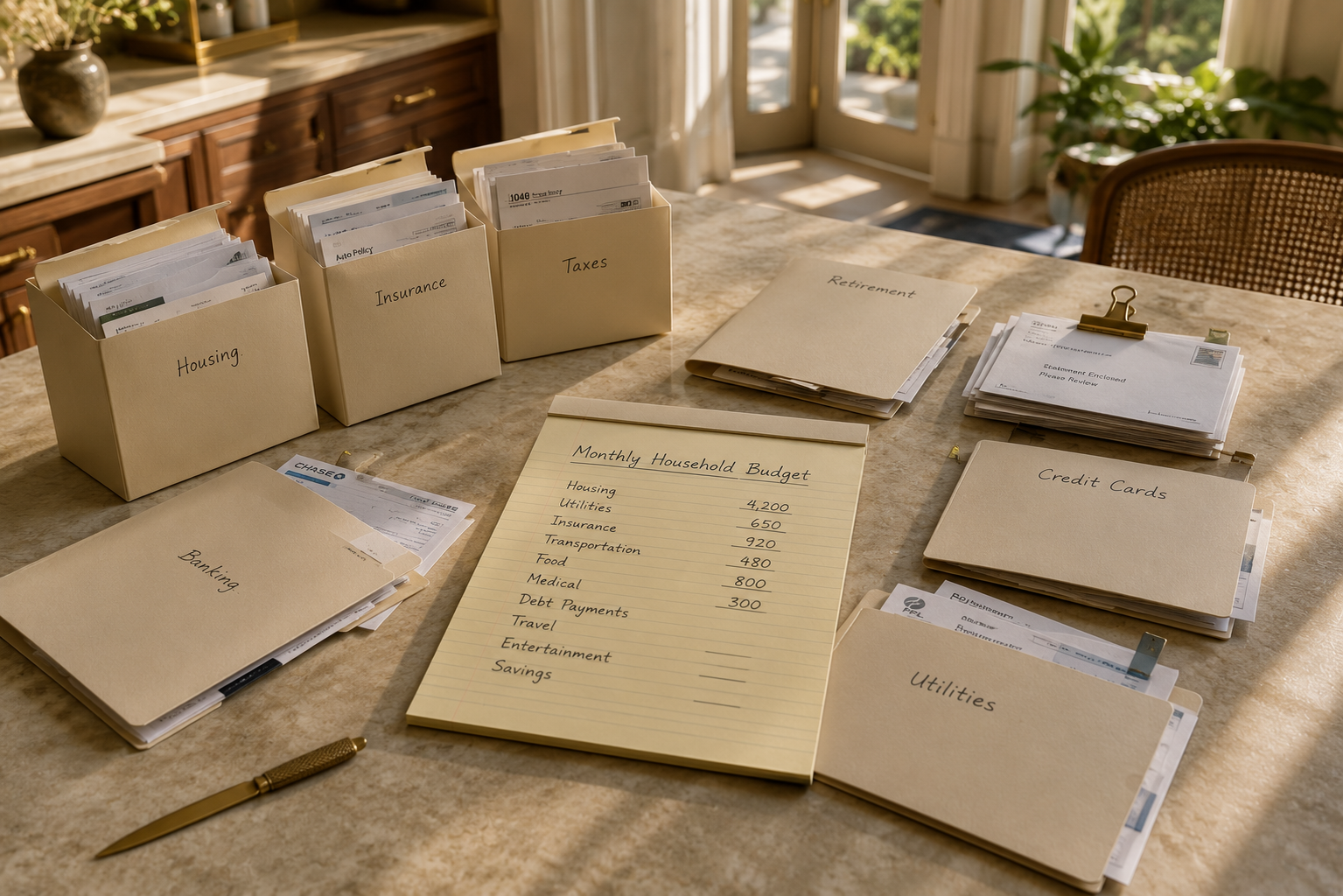
The most critical component of your financial review is CREATING A BUDGET which includes:
Reviewing Your Expenses and Spending Habits
1. Create categories of expenses related to your lifestyle (household, school expenses, hobbies, gifts... etc.)
2. Put a specific monthly amount you spend in each category, but don't inflate the numbers.
3. Highlight in green what categories are must-haves. These are your "fixed expenses." You also will have "variable expenses" that you can live without, or that can be reduced. Highlight them in pink.
Identifying Your "Sources of Spending"
How do you pay for your expenses? Cash, credit card, debit card, or personal check? Who pays for your expenses? You and your spouse only, or anyone else, like parents or friends?
Based on who pays for your expenses, you should adjust them accordingly.

Tracking Your Expenses
Now, in anticipation of significant changes in your lifestyle, it is time to have tremendous accountability for your money. How?
Start tracking your expenses regularly. It is a critical item on your pre-divorce checklist PDF, so don't procrastinate! You can do it manually or using Mint.com, Microsoft Money, or Excel.
Developing a Post-Divorce Budget
Now, you should prepare your new budget based on your current expenses. It has to be a living and breathing document tailored to your today's needs.
You should have a realistic budget, which is a big part of the steps in getting divorced and, later, your post-divorce checklist.
What's next?
3. Obtain a Copy of Your Credit Report
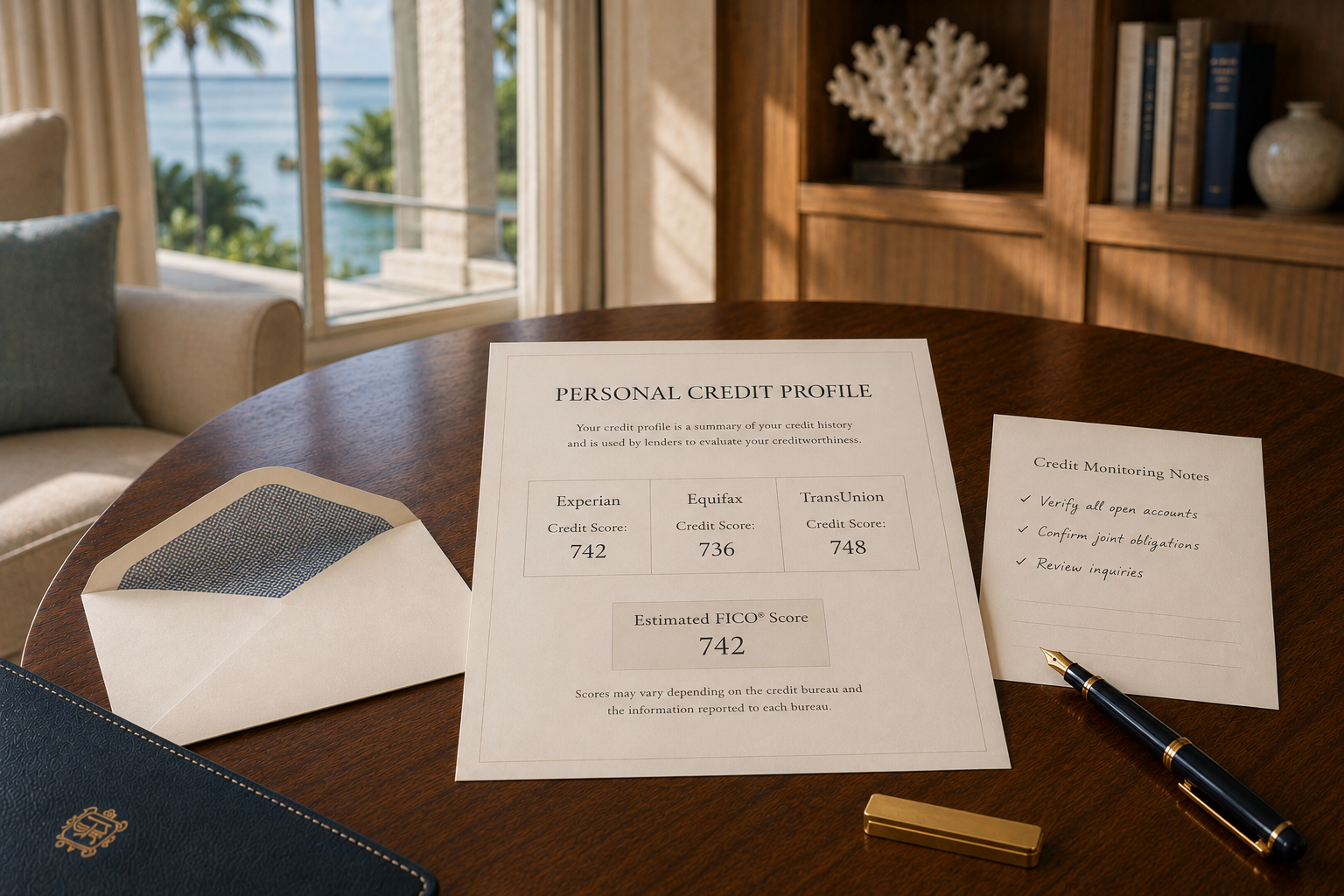
What if you or your spouse put some expenses on a credit card and don't have access to all statements? Guess how to get a record of your debts?
Obtain a copy of your credit report! This will give you a clear picture of your financial standing and help you make informed decisions.
Also, don't be surprised if you find some items you forgot or some that are not yours. Also, be sure that there are no erroneous charges.
By the way, what is your FICO score? Above or below 740? When was the last time you checked your credit?
When you get a report, start tracking and checking your credit score periodically. You will see if your spouse goes on a spending spree with your joint credit card. Or, if anyone else uses your credit profile, would you want to know?
Visit www.AnnualCreditReport.com and obtain your free credit report from all three reporting agencies. This simple action can empower you to stay on top of your credit health.
My favorite tool for periodically running my credit report is www.CreditKarma.com. You can sign up for free and it is simple and intuitive.
Remember: you can't expect what you don't inspect. So it is your ultimate responsibility to protect your credit.
Now, it's time to prepare all your financial documents.
4. Gather Documents to Prepare for Divorce
As outlined in your pre-divorce checklist PDF, gathering important financial and personal documents is one of the first steps toward preparing for divorce.
Collect as much information as you can legally access and bring relevant documents to your appointment with an attorney or other divorce professional. Being organized can help you ask better questions, save time, and potentially reduce professional fees.
Below are seven categories of documents to help you get started.Pre-Divorce Documents List

Legal Documents
Important: Prenuptial agreements, postnuptial agreements, deeds, and other documents affecting property ownership or classification may be relevant to your divorce. However, the existence of a signed document does not automatically determine whether it is legally enforceable or how the property will be treated. Have a qualified Florida family law attorney review these documents.

Personal Information

Personal Finances

Investment Statements (6 months)

Real Estate Documents
Employment Documents

Business Documents
Feeling overwhelmed?
Not sure about your spouse's retirement accounts, business interests, or other financial matters?
You don't need to have every answer today. Start with the documents you already have and identify what information is still missing.
Gathering financial documents is an important step in your pre-divorce preparation. The more organized you are, the better prepared you'll be to discuss your options with your divorce professionals.
Download the complete Document Checklist below, and let us know how we can help.
5. How to Organize Divorce Paperwork for Your Pre-Divorce Checklist
Arthur ashe
-tennis star-
One important key to success is self-confidence, and the key to self-confidence is PREPARATION.
Let's keep your confidence high and get you organized. You cannot afford to drown in the ocean of emails, forms, and documents.
Hard Copy File System
When you gather all the documents, make three copies of each document: for you, your lawyer, and your financial professional.
Next, place those copies in manila folders, 3-ring binders, or accordion files. Use a portable file box with a handle that holds just enough and is easy to carry around.
It is critical that you keep originals either in a safe deposit box or another secure location, especially if you still reside with your spouse. Also, you can give them to your trusted friend.
Electronic File System
For easy access to your divorce documents, have an electronic file system. You should scan all originals through secured websites protecting your personal information, like Citrix ShareFile.
Additionally, have a mobile format, and don't forget to change passwords on your electronic files to protect them.
For electronic communication, create a new email account that you will use only for your divorce process. Be sure your spouse or children cannot guess your new email password.
Divorce File Categories
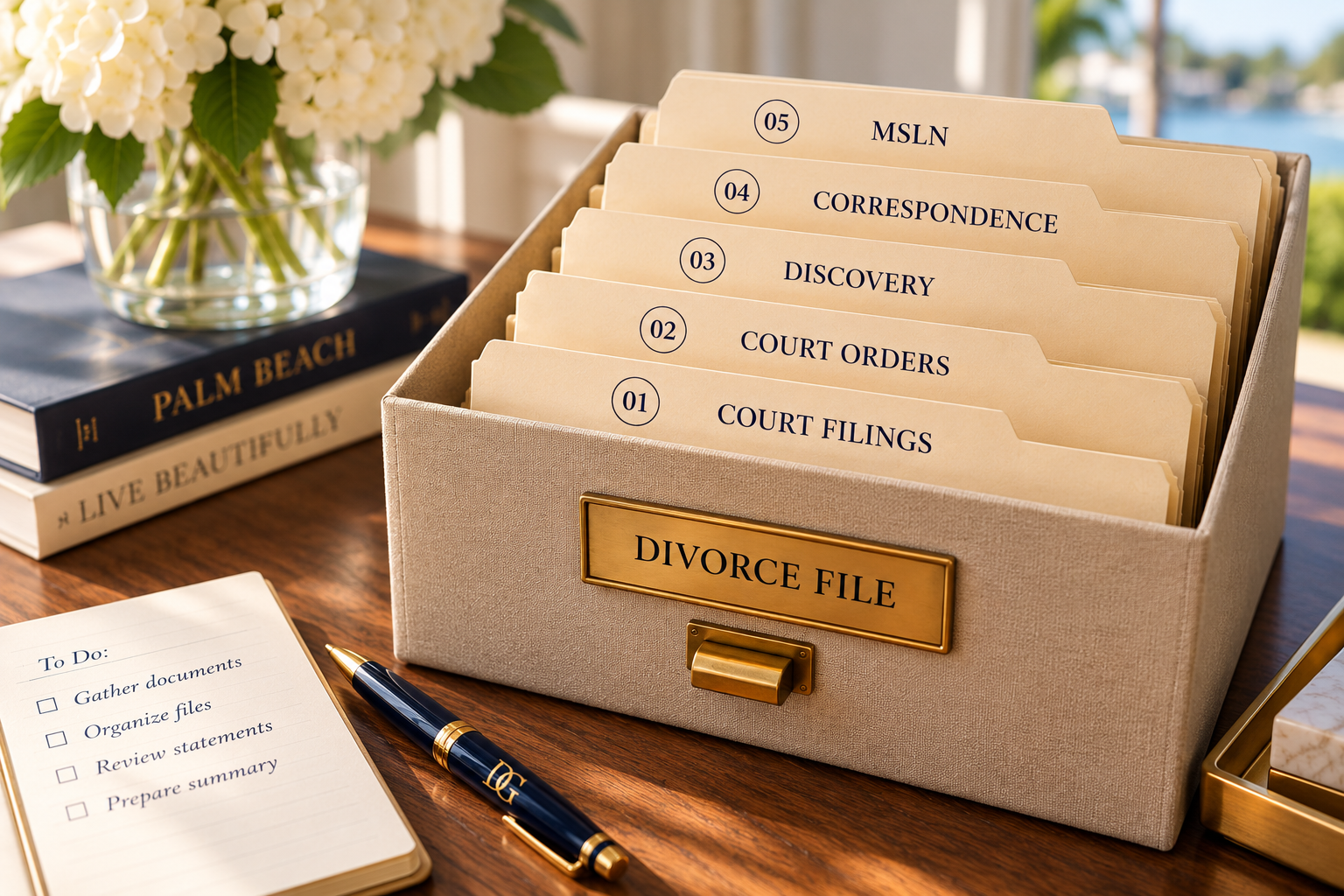
The following are the categories of your Divorce File:
Category 1
Pleadings or other documents filed with the court.
Category 2
Court orders with dates, rulings to motions filed, or tasks to be done by specific dates.
Category 3
Discovery and documents filed by you or on you.
Category 4
Correspondence
Be sure to ask your attorney to send you all pleadings, correspondence, discovery requests, and responses. As a result, you should always have a complete file for your own case.
But are there different methods of divorce?
6. Research Divorce Alternative Solutions

As a part of your pre-divorce checklist, the next step is to decide HOW to get a divorce. There are various methods, and each has its pros and cons.
Different Ways to Divorce
There are two major divorce methods:
- DEFAULT Method - your case goes to court, and the judicial officer issues rulings;
- ADR Method (Alternative Dispute Resolution)
In turn, the ADR method has four categories:
How to Decide on a Method of Divorce
It largely depends on the relationship between you and your spouse:
- Do you worry about your or your children's safety?
- Is your spouse interfering with your access to enough cash?
If your answer is "yes," - get a lawyer!
If, on the other hand, you and your spouse can be amicable, you might do it yourself. Of course, just because you both are getting along now doesn't guarantee an amicable situation tomorrow.
Of course, before this step of your pre-divorce checklist, you might consider pre-divorce counseling. It is a part of Divorce 101.
CDFA® as a Financial Neutral for Amicable Couple
What if you and your spouse are amicable and have more complex finances?
In this case, you should consider the help of a CDFA® as a "financial neutral." They will review your finances and craft a fair settlement. Then, a legal document preparer will do the rest.
You and your spouse will work through your divorce settlement together and can remain friends after a divorce. Additionally, you will save tons of money on legal fees.
Of course, whatever you decide is subject to your state-specific divorce rules and regulations.
And now... the biggest elephant in the room...
7. How Do I Prepare My Husband For Divorce?
Breaking the news to your husband that you want a divorce can be scary and emotionally charged.
Remember, divorce is not just an emotional decision. It is also a financial transaction. As difficult as it may be, try to stay calm and think about the financial consequences, not just your emotions.
The conversation will probably be one of the most uncomfortable you'll ever have. Whenever possible, have the divorce talk face-to-face rather than delivering the news through an email, text message, relative, or friend.
But here's something equally important.
After breaking the news, give your spouse some breathing room. You cannot predict how someone will react, and pushing for immediate answers or decisions may only make things worse. Your husband may need time to process what you've said.
A little wisdom: Consider arranging separate accommodations for a few days if tensions are running high. However, before leaving the marital home, understand whether doing so could affect your legal or financial situation.
If you have children, plan the conversation for a time when they are not present. A visit with grandparents or a sleepover with friends may give both of you the privacy you need.
One important exception: If you have concerns about your safety or fear an aggressive reaction, do not insist on a face-to-face conversation. Prioritize your safety and seek professional guidance before deciding how to proceed.
Remember: how you behave is critical to how to prepare for divorce and go through it successfully.
8. Pre-Divorce Checklist FAQ

1. Review your pre-divorce finances
2. Create a budget and track your expenses
3. Obtain a copy of the credit report and start tracking it
4. Gather financial documents
5. Organize your divorce file (hard and electronic copy)
6. Research alternative divorce solutions
7. Talk about divorce to your spouse
- Don't make decisions emotionally. Think financially! Divorce is a business transaction.
- Don't brag on SOCIAL MEDIA about any of your divorce needs. Shut up!!!
- Don't try to hide money. It might hurt your case.
- Don't go on a shopping spree if it doesn't really benefit your spouse - you can be accused of wasting marital assets.
- Don't bully or try to scare your spouse
1. You should carefully prepare your kids for the idea of divorce.
2. Consult a child psychologist or a divorce coach who will help you with the steps on how to talk to your kids. They also will help your children to adjust during a divorce process and beyond.
3. Talk to your spouse about the parenting plan which is good for both of you and your kids. If there is a potential disagreement, - talk to a lawyer!
4. Prepare all information on children: contacts at school, copy of kid's class schedule and extracurricular activities, all child expenses.
9. Final Thoughts: Are You Ready for Divorce?
Now you know some of the important steps to take if you decide to get divorced.
Are you ready?
It's natural to feel emotional and uncertain about what comes next. After all, uncertainty is often one of the hardest parts of divorce. That's why having a plan matters.
This pre-divorce checklist PDF can help you prepare, stay organized, avoid unnecessary mistakes, and potentially save time and money along the way.
Remember, divorce is not just an emotional experience. It is also a financial transaction. And while emotions will inevitably play a role, the decisions you make today can shape your financial future for years to come.
So take your time. Ask questions. And make informed decisions.
Now, there's one thing left to do: download your free pre-divorce checklist PDF and let us know how we can help.
You may not get a second chance to negotiate your divorce settlement. Make your decisions count.
For the life you're building,
Nella Zelensky
About the Author
Facing her own divorce, Nella discovered firsthand how overwhelming financial decisions can become—even with a background in finance. That experience inspired her to focus on divorce financial analysis. Building on an established career in finance, she earned the Certified Divorce Financial Analyst® (CDFA®) designation, followed by the Master Analyst in Financial Forensics® (MAFF®) credential.
Today, as Co-Founder of The Divorced Gals, Nella helps women understand the financial consequences of divorce, ask better questions, and make decisions with greater clarity and confidence.